.webp)
.webp)
.webp)
.webp)



If you’re a student right now, you already know the weird part: school can feel stuck in 2009, but your deadlines are very real in 2026. You’re expected to write faster, cite cleaner, and think clearer, all while juggling classes, work, and life.
At the same time, AI detectors can feel like a trap. You can write something honest, then spend the whole night worrying it’ll get flagged anyway. That stress hits even harder when professors use AI tools to grade, but punish students for using help.
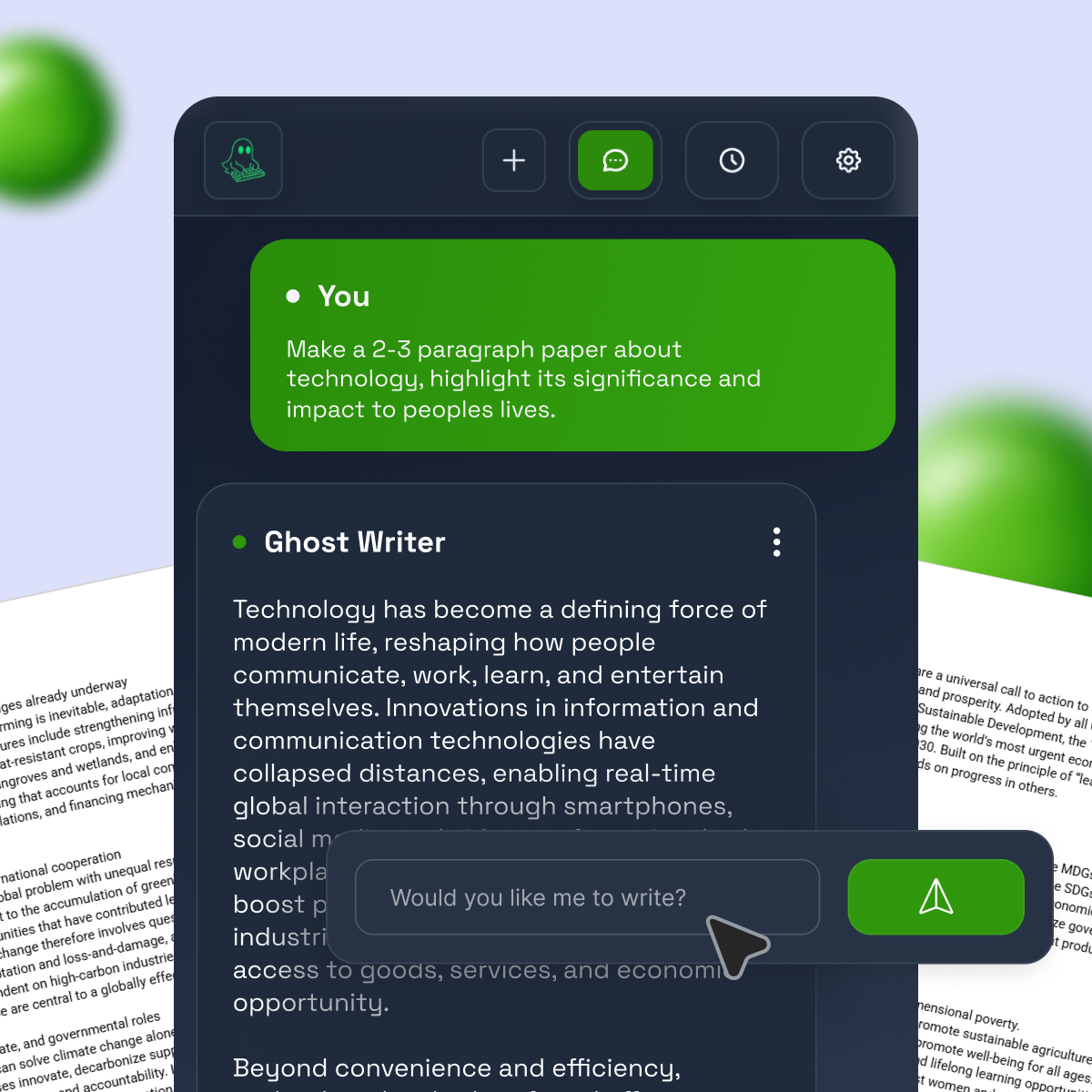
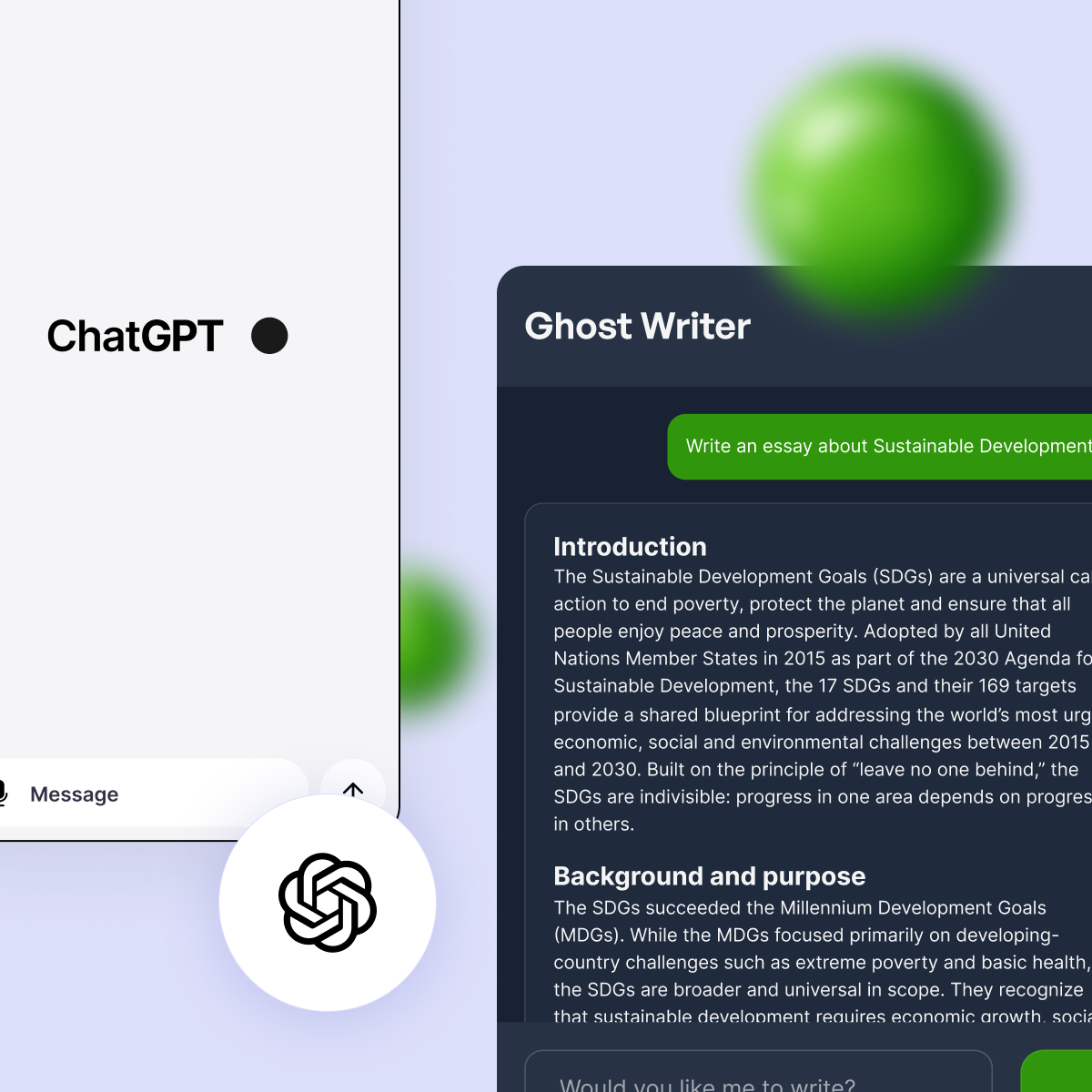
GhostWriter is a stealth AI writing tool that types like a human, directly in Google Docs, so you can move from ideas to a real draft without copy and paste.
This page explains the story behind GhostWriter, what it’s meant to do (and not do), and why it’s built the way it is.
GhostWriter is a writing support tool for students who need help turning rough thoughts into clear paragraphs. The main idea is simple: instead of generating text you paste into a document, GhostWriter produces writing by typing in Google Docs, one keystroke at a time.
That matters because real writing usually happens inside the doc. You start messy, you rewrite sentences, you move a line up, you fix a weird word choice. GhostWriter is built to fit that flow, so drafting feels more natural and less like you’re trying to glue text from one place into another.
GhostWriter tends to help most when you’re in one of these situations:
It’s also useful for smaller tasks that still take time, like rewording a clunky paragraph, building a stronger opening, or writing a conclusion that doesn’t sound like a robot repeating the prompt.
A quick note on responsible use: GhostWriter is meant to support your work, not replace your learning. You should still read what it writes, edit it, check facts, add sources, and make sure it matches your class rules. Think of it like training wheels or a tutor that helps you get rolling faster, then you steer.
A lot of students feel trapped in a double standard. Schools want original writing, but the systems used to judge “original” can be shaky. AI detectors often rely on patterns, not proof, and they don’t always handle different writing styles well.
That creates a new kind of anxiety: you’re not only worried about doing the assignment, you’re worried about being accused. Tools like Turnitin-style checks can flag the wrong things, and many students don’t get a fair chance to explain their process.
GhostWriter exists because that tension is real. It’s not about “getting away with something.” It’s about reducing stress when the rules are strict, the deadlines are tight, and the detection systems aren’t perfect.
GhostWriter’s standout difference is the experience. It writes by typing, inside Google Docs, instead of dumping a finished answer into a box. That means the output arrives in a way that looks and feels closer to real drafting.
For students, that also reduces friction. You don’t have to jump between tabs, format pasted text, or fight the awkward feel of “here’s a full essay, good luck.” You can prompt, watch it appear, then pause and edit as you go, like you would with your own writing.
It’s not framed as a magic trick. It’s a more natural way to get from zero to a draft you can actually work with.
GhostWriter wasn’t built in a boardroom. It started in a dorm room during exam season, when everything feels louder: the pressure, the caffeine, the constant clock in your head.
The first versions were simple. The goal was not to build a flashy “essay bot.” It was to build something that matched how students really write, late at night, with tabs open, notes scattered, and a deadline that doesn’t care how tired you are.
We kept it focused on one core job: help students turn ideas into readable writing, fast, without making the process feel fake. That meant thinking about how the tool would behave during real use, not just how it would look in a demo.
Today, the team is still student-centered. It’s a mix of students, designers, and developers, with backgrounds that overlap in practical ways: computer science (to build and test), education tech (to understand classroom pressure), and UX (to make the tool feel simple instead of stressful).
The point wasn’t to build a “brand.” The point was to build what we wished we had.
The spark came from a moment that felt unreal. One of us got flagged for AI use on an essay they wrote from scratch. No generator, no shortcuts, just their own work.
That’s the kind of thing that messes with your head. First comes confusion, then frustration, then the awful thought: “If my real writing can be questioned, what am I supposed to do?”
That experience made the takeaway clear. The system is imperfect, and students are the ones carrying the risk. GhostWriter was built in response to that, with empathy for the fear and the unfairness that can show up around AI detection.
From day one, the product goals were plain:
We also keep improving it, because detectors and school policies change. That said, no honest tool can promise you’ll “never get flagged.” What GhostWriter can do is give you a writing process that looks more like normal drafting, while keeping you in control of the final result.
GhostWriter’s mission is simple: give students back control of their writing in a world where detectors can get it wrong. When the rules are strict and the grading tools are inconsistent, students need support that doesn’t add more stress.
Here’s what guides the product:
If you’re curious, try the free trial and see how it fits your workflow. If you’re the type who wants to know who built your tools, spend time learning about the team and the story behind it.
“Leveling the playing field” means helping students who are under real pressure, not handing out a fake “easy mode.” GhostWriter is meant to reduce blank-page panic and help you express what you already understand.
A healthy workflow can look like this:
When students do that, the work stays theirs. The tool helps with momentum, not meaning.
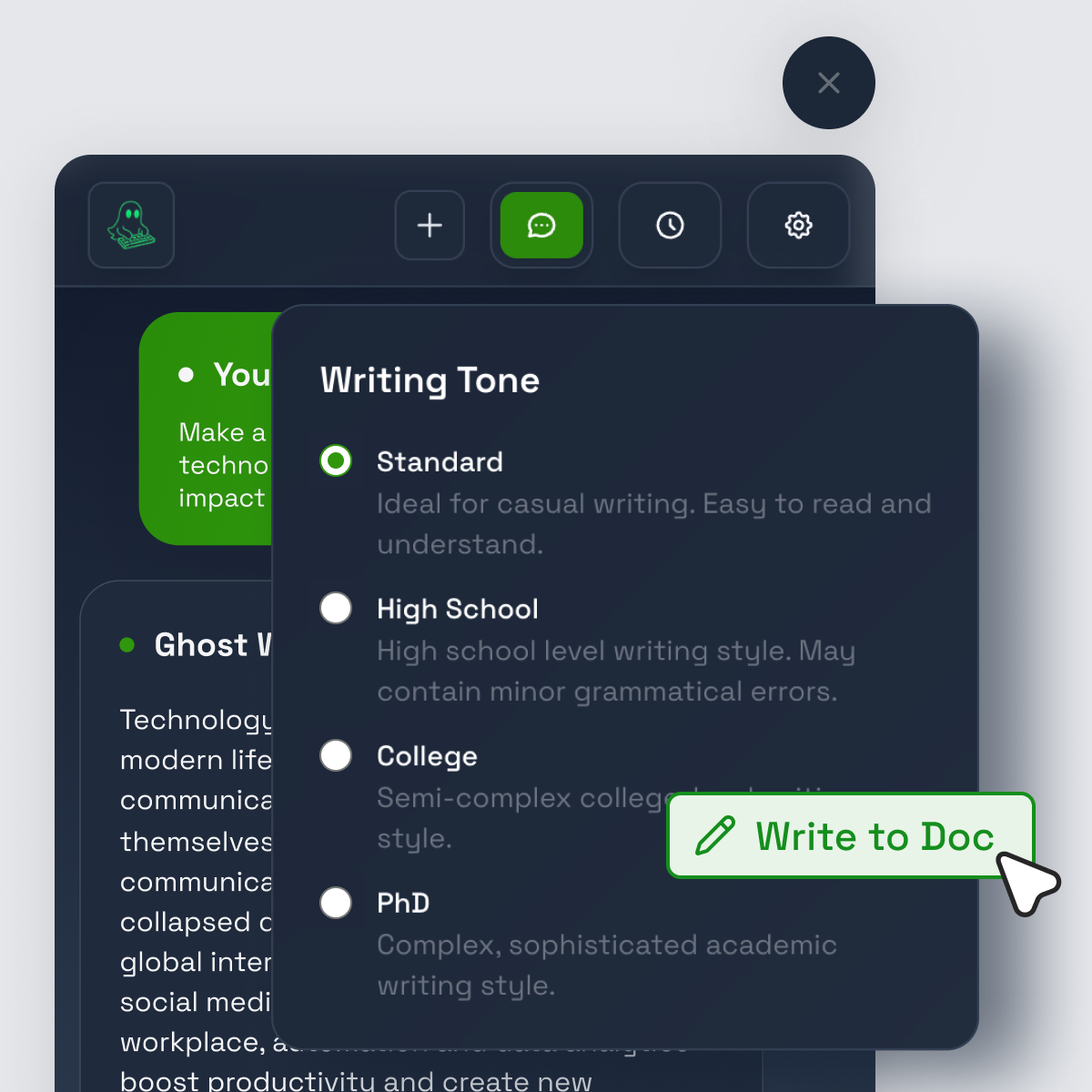
GhostWriter is headed toward better control and clearer guidance. That includes stronger writing controls (so you can shape tone and structure), clearer citation support (so sources don’t get messy), and more in-product tips that encourage smart edits and good habits.
The goal stays the same: reduce stress, improve drafting, and keep students in the driver’s seat.
GhostWriter started the way a lot of student tools start: in a dorm room, during exam season, built by people who were tired of feeling powerless. It exists because AI detection anxiety is real, deadlines are real, and false flags can be unfair.
What GhostWriter stands for is simple: confidence. Not blind trust, not shortcuts, just a calmer way to write when the pressure is on. If you want to see whether typed drafting fits your style, try it, then make it yours with thoughtful edits and honest sources. Your voice should still be the loudest part of the final page.


BLOG
Discover insights and experiences from our academic community



.svg)